
Hannah Bailey
Feb 26, 2026
7 min read
CDP vs CRM vs CXP: what retail teams actually need
CDPs organise data, CRMs manage relationships, and CXPs shape experience. Customer intelligence makes those signals commercially actionable. If you're evaluating platforms for your retail business, understanding what each category actually does — and where the gaps are — will save you months of confusion.

CDPs organise data, CRMs manage relationships, and CXPs shape experience. Customer intelligence makes those signals commercially actionable. If you're evaluating platforms for your retail business, this article will help you identify the differences.
Customer Data Platforms (CDPs)
A CDP collects customer data from multiple sources such as e-commerce, POS, email, loyalty and unifies it into a single customer profile. It solves the fragmentation problem. If your customer data lives in six different systems that don't talk to each other, a CDP brings it together.
Best at: Data unification, identity resolution, audience building for marketing campaigns.
Limitation: CDPs are infrastructure. They organise data but don't inherently tell you what to do with it. You still need analysts or additional tools to extract commercial insight.
Customer Relationship Management (CRM)
CRMs are the workhorse of sales and service teams. They track interactions, manage pipelines, and store contact records. In retail, CRMs are often used to manage clienteling, VIP communications, and post-purchase follow-up.
Best at: Managing one-to-one relationships, tracking communication history, sales pipeline management.
Limitation: CRMs are reactive. They record what's happened but rarely surface what's about to happen. They depend on manual input and don't typically analyse behavioural patterns across your full customer base.
Most retail brands don't need another platform, they need the intelligence tools that makes their existing platforms work harder and protect their customer's personal information.
Customer Experience Platforms (CXPs)
CXPs focus on orchestrating the customer experience across channels by personalising website content, managing loyalty programs, coordinating omnichannel journeys. They sit at the intersection of marketing automation and experience design.
Best at: Journey orchestration, personalisation, loyalty program management.
Limitation: CXPs optimise the experience for customers who are already engaged. They're less effective at identifying which customers are disengaging or where untapped opportunity exists.
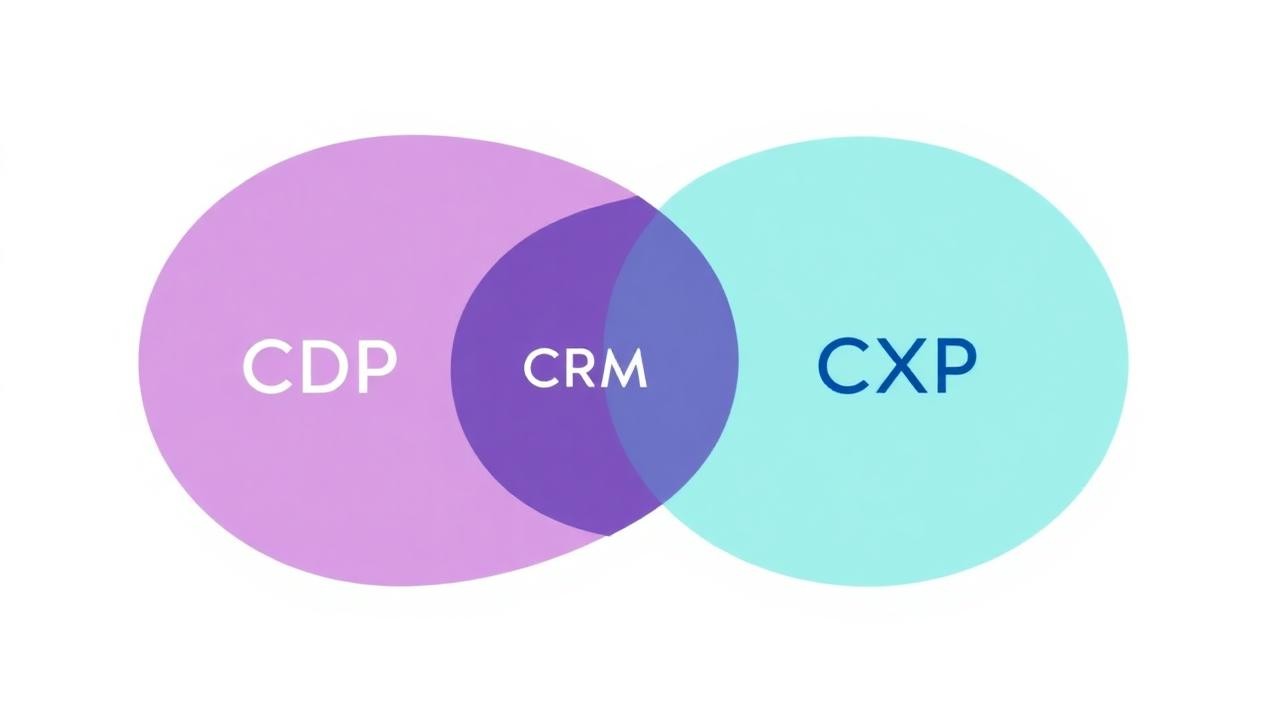
Each platform type serves a distinct purpose: customer intelligence connects them.
Where Customer Intelligence Fits
Customer intelligence isn't a replacement for any of these categories, it's the layer that makes them more effective. While a CDP unifies data, a CRM tracks interactions, and a CXP orchestrates experience, customer intelligence continuously monitors your entire customer base and surfaces the signals that matter most:
Which VIP customers are showing signs of lapsing?
Which new customers made high-value first purchases and deserve immediate attention?
Which segments are growing, shrinking, or shifting?
What's caused a drop or lift in average order value?
Where should your team focus this week for maximum commercial impact?
Making the Right Choice
The right platform depends on your biggest gap. If your data is fragmented, it's challenging to start with a CDP as they are traditionally very expensive and require a dedicated team to keep ownership of it and ensure data is flowing and being shown correctly. If your sales team needs better relationship tracking, invest in your CRM.
Most mature retail businesses will eventually use a combination. That's exactly where It's Noa sits: a platform which unifies your data, monitors and provides recommendations.
The key though is understanding which will drive the most immediate commercial value without the need for additional headcount.
Blogs & News
Related Blogs

By
Hannah Bailey
6 min read
What is customer intelligence in retail?
Customer intelligence turns fragmented customer and trade data into an easy-to-use and live operating view. It's the difference between reading last month's report and acting in time.

By
Hannah Bailey
7 min read
The three KPIs customer intelligence should be moving: retention, revenue, and profitability
Retention, revenue, and profitability are the KPIs customer intelligence should be moving. Here's what they reveal when seen together.

By
Hannah Bailey
9 min read
Customer retention management: a practical playbook for mid-market retail leaders
etention is retail's most-discussed lever, yet it's usually handed to one person without the time, training, or support to deliver it. Where it should sit, and how to start.